

The Language of Gods and Demons
AI conjures up fantasies of immortality, the universality of computation, and an apocalyptic teleology of accelerationism.
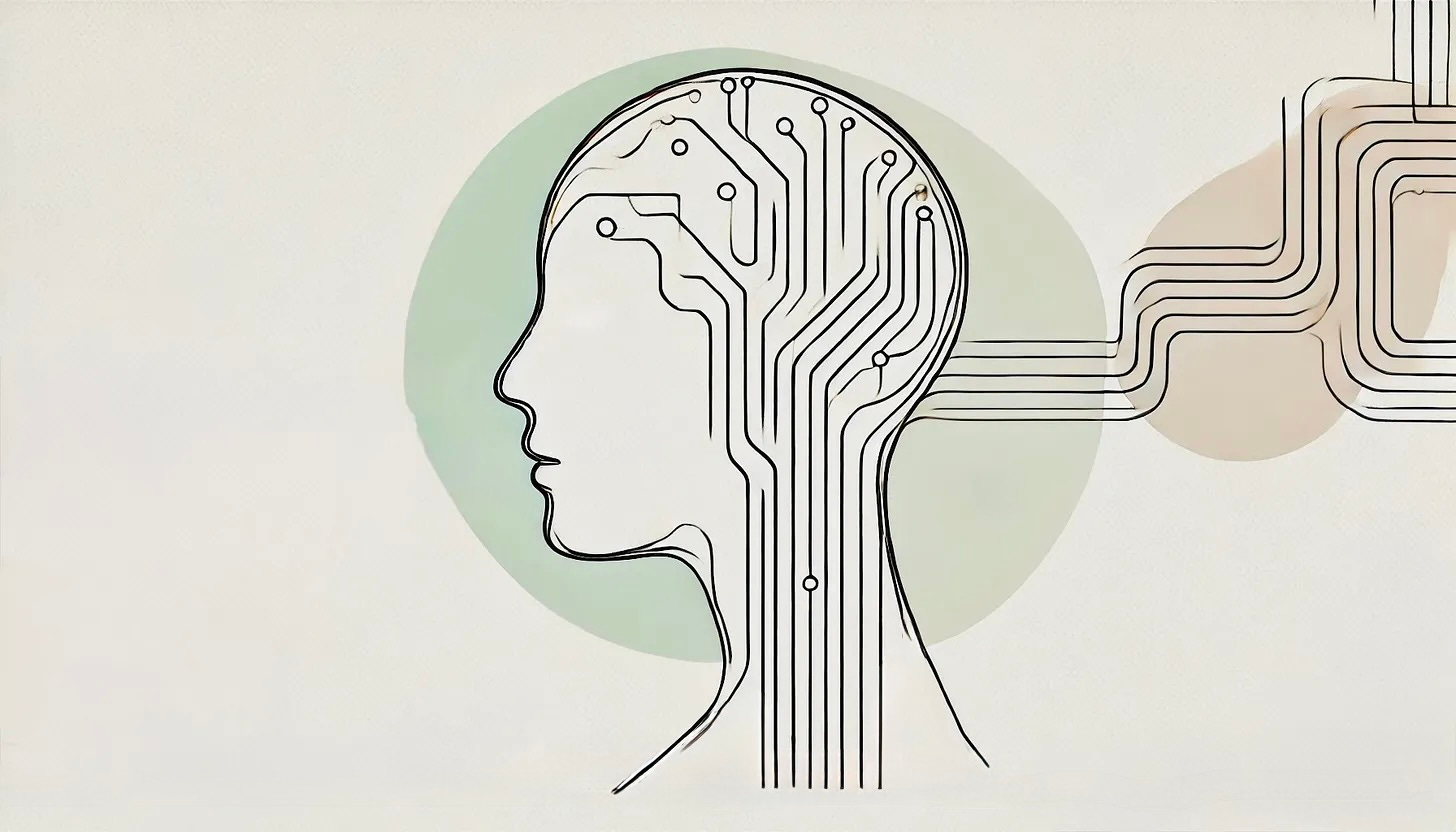
One of the most difficult tasks in writing and critical thought is being honest with yourself and the reader about the ethical commitments of your work. This is not merely about scholarship or sincerity, but the idea that there is a truth value and praxis that comes from writing. It sounds self-aggrandizing to say this under the tyranny of “content” and self-publishing. Our moment is characterized by a profound despair that writing or journalism may in fact have no relation to political change. What remains of public intellectual life is often farcical. Malcolm’s Gladwell’s recent admission that his ideas are to be taken “loosely” speaks to the mercurial approach to writing and thought that is both endemic and rewarded. The logic of exchange value that structures digital networks governs the valorization of thought. This is reified into a new age of self-help, in which optimization, manifestation, and abundance are the watchwords of grindset influencers, wellness gurus,and timeshift Witch-Tokers. Generative AI has arrived in this cultural moment as a personal optimization machine for language, thought, and brute instrumentality in social relations.
AI, Language, and Lack
In my work as a digital communications and platform studies scholar, I spend a lot of time critiquing the failures of AI and the fatuous claims of technology evangelists. I hold to an essential materialist logic that language is rooted in social and political contexts, and that the value of language, in either human or computational form, lies in its potential for emancipation and enlightenment. The rupture of AI seems to pose some foundational spiritual questions about language that have been long sublimated. Lacan privileges language as an existential trauma—a system “[we have] been thrown into…caught up in its gears.”1 We can add to this the network infrastructure that abstracts and calculates us through sensors, data markets, and signals that are ubiquitous and imperceptible.
From this mess of alienation, AI conjures up fantasies of immortality, the universality of computation, and an apocalyptic teleology of accelerationism. This techno-accelerationist drive promises “the elimination of lack” and an “eradicat[ion] of the human swamp” of irrationality known as the unconscious.2 The pain of writing and thinking is replaced by our personal optimization assistants. If you are not hacking your professional practice through AI or using a crypto-trading bot, you are not going to secure your place aboard the Event Horizon.
Our current lack of an emancipatory telos or a social contract to stand athwart techno-experimentation in every social domain means the “cult of the technological sublime”3 accelerates. We are being remade through the fantasies of American tech capitalists. This current moment of AI represents a transformation in human thought and creativity, not out of any techno-transcendence, but a hollowing out of the public ethic. Neoliberal procurement policies have made governments the sponsor and plaything of tech-disruptors. The populist backlash against universities and the creative industries has given venture-capitalists and founders a popular base for their AI and tech triumphalism. It is a revanchist alliance between anti-intellectuals and myopic tech-founders hostile to creative processes they do not understand.
The late great critic of tech power, David Golumbia,4 described generative AI as a spectacle aimed at inducing despair, such that the computational worldview supplants human creativity. This despair is matched by the cynicism of arbitrage scams, labor theft, and rent-seeking in tech. The tech-elite have emerged as the influencers and pseudo-philosophers of this transformation, promising a reopening of the frontier and generational wealth to their followers. It brings into sharp relief the relationship of information technologies and language to the religious fantasies of American Empire.
The AI Frontier Fantasy
The AI fantasy we are forced to endure is indelibly shaped by a techno-capitalist infatuation with new worlds and frontiers. There is a retracing of colonial fantasies of abundance that both secularize religious concepts and naturalize extraction. The new world is one where imperialist classification, cartography, and communication technologies take on a godly character. Language’s power of abstraction becomes part of experiencing and encoding the divine.
